Cell layout
Reach, tool path, pallet stations, access doors and service zones arranged in a dimensioned layout.

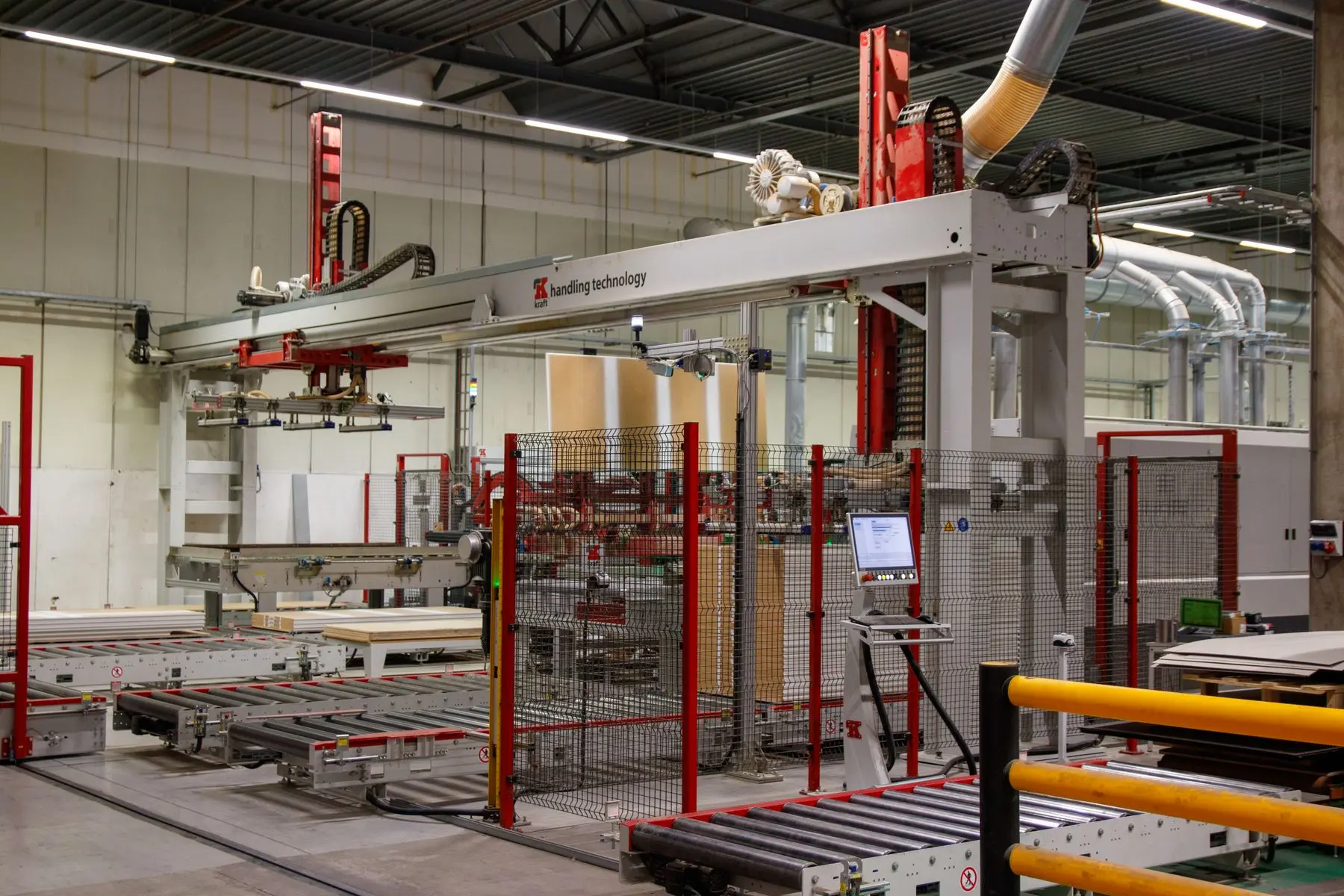
Complete palletising cell integration
Bring product handling, the robot, gripper, pallet flow, recipes, controls and safeguarding together under one clear project scope.
System boundary
A palletiser is a connected production machine. Defining the full boundary early prevents gaps between the arm, conveyors, pallet supply, guarding and line controls.
| Design input | Why it matters | What to provide |
|---|---|---|
| Product interface | Creates a repeatable, confirmed pick condition. | Conveyors, guides, stops, turners, metering, squaring, grouping and sensors. |
| Robot package | Delivers the required motion within payload, reach and duty limits. | Robot, controller, base, dress pack, end effector and tool sensing. |
| Pallet interface | Locates empty pallets and removes complete loads safely. | Manual stations, dispensers, centring, conveyors, buffers and forklift access. |
| Control interface | Coordinates demand, status, recipes, faults and recovery. | PLC, HMI, safety control, networks and upstream/downstream signals. |
| Operator interface | Supports changeover, replenishment, inspection and maintenance. | Access, ergonomics, safe modes, instructions, lighting and training. |
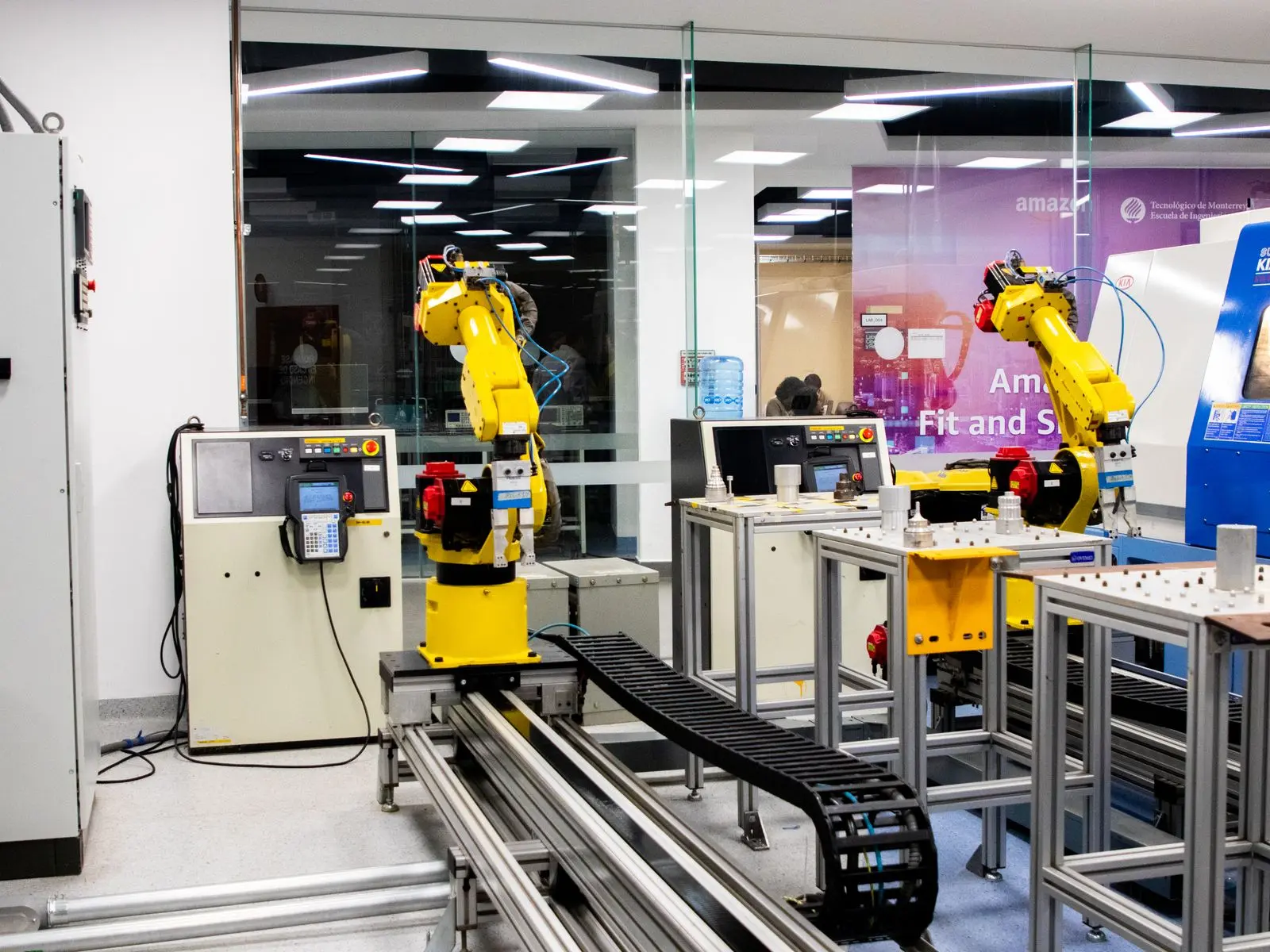
Controls and line interfaces
The PLC and HMI can manage line status, recipe selection, pallet availability, layer progress, alarms and authorised recovery. Interface signals are documented so upstream and downstream equipment respond predictably.
Mechanical and safety integration
Guarding geometry, loading access, forklift routes, maintenance space and floor conditions are part of the cell—not items to solve after the robot layout is fixed.
Reach, tool path, pallet stations, access doors and service zones arranged in a dimensioned layout.
Risk-based guarding, interlocks, scanners, emergency stops and safe operating modes.
Robot base, floor interfaces, conveyors, utilities and tie-in responsibilities defined before site work.
Agreed drawings, control information, instructions, test evidence and training records supplied for the project.
Project evidence
Acceptance should reflect the products, patterns, rate, changeovers and recovery functions that matter in production. We agree the evidence and test materials before trials begin.
Confirm product matrix, process video, output, pallet data and site constraints.
Define layout, architecture, interfaces, exclusions and acceptance basis.
Complete mechanical, electrical, software, safety and tooling design.
Integrate, program, trial, close issues, install, commission and train.
Frequently asked questions
Yes, subject to survey and interface review. We confirm mechanical levels, product presentation, control signals, accumulation, safe stopping and ownership of each interface before finalising the scope.
Yes. Empty-pallet magazines, dispensers, centring, transfer conveyors and interfaces to wrapping or warehouse handling can be included where required.
The acceptance plan is agreed for the project and can cover product range, pattern, output, changeover, alarm handling, guarding and control functions. Representative product, pallets and consumables are important for meaningful trials.
Training can be included for normal operation, recipe selection, changeover, routine checks and authorised recovery. The exact content and attendance are agreed within the project scope.
Known future formats can be included in the design review. Allowance for extra payload, reach, recipes, conveyor width or tooling should be made against defined future data rather than an open-ended assumption.
Start with the application
Send the packaged-product dimensions and mass, current line rate, required pallet pattern, available space and a photo or video of the end of the line. We will identify the next technical step.
Planning a palletising project?
Send the product dimensions and weight, target output, pallet size and a photo or short video. We will review the application and identify the next technical step.