Compact cobot palletiser
Often considered for moderate-rate, moderate-payload work where a compact layout and recipe flexibility matter. The complete safety application still needs assessment.

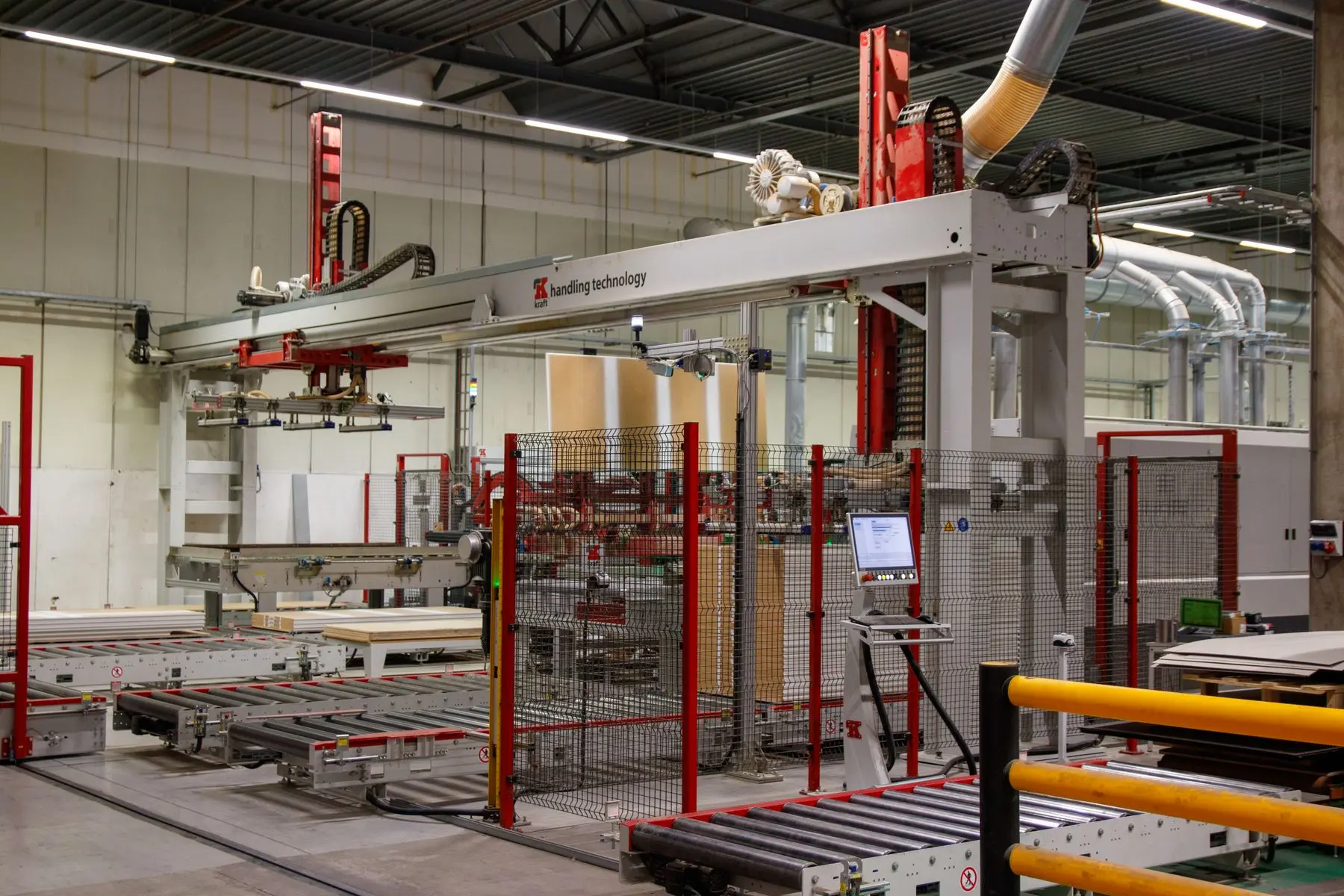
Robot palletiser price and business case
There is no responsible fixed price for a complete palletising cell without the application data. Robot, gripper, conveyors, pallet handling, safeguarding, controls, installation and production proving all affect the investment.
Quick answer
The fastest route to a credible budget is to define the product matrix, required packs per minute, pallet formats, stack height, operating hours, available space and the boundary with existing equipment. Oxford Industrial Automation can then compare a compact cobot, industrial robot or higher-payload cell on a like-for-like scope.
Installed cost drivers
Two cells using the same robot can have very different engineering and equipment requirements. The following items usually have more influence than a headline robot price.
| Cost area | What changes the scope | Information that reduces uncertainty |
|---|---|---|
| Product handling | Pack stability, porosity, surface, orientation, accumulation and multi-pick requirement. | Samples, dimensions, mass, photographs and products per minute by SKU. |
| Robot and gripper | Total payload, reach, stack height, speed, duty and application-specific end effector. | Full SKU matrix, pick quantity and prohibited contact surfaces. |
| Pallet automation | Manual or automatic pallet loading, UK/CHEP/Euro/custom formats, layer sheets and full-load outfeed. | Pallet drawings, target patterns, maximum height and forklift workflow. |
| Controls and safety | Line interfaces, recipes, scanners or guarding, access points and recovery modes. | Existing control architecture, operator tasks and site traffic plan. |
| Delivery and proving | Factory trials, installation windows, services, training and acceptance testing. | Site layout, utilities, shift pattern and agreed test products. |
ROI and payback
Automation value can come from more than replacing a manual palletising task. Include the production constraints that the project is expected to change, then separate confirmed costs from assumptions.
A better enquiry
Provide product data, current and target output, shifts per week, pallet patterns, stack height, available space and current staffing. We can identify the likely system boundary and the remaining engineering questions.
Start a cost and ROI reviewCompare architectures
The lowest purchase price is not automatically the lowest cost per pallet. Required rate, product mass, future formats, pallet exchange and production duty determine the sensible architecture.
Often considered for moderate-rate, moderate-payload work where a compact layout and recipe flexibility matter. The complete safety application still needs assessment.
Suited to higher speeds, heavier tooling, longer reach or sustained duty, with engineered guarding and access around the production process.
May reduce duplicated equipment and manual pallet change, but requires buffering, line-priority logic and a clearly defined full-pallet route.
Related palletising guidance
A practical checklist for products, rates, pallets, safety and supplier scope.
Read this guideCheck where a collaborative palletising cell does and does not fit.
Read this guideSee the equipment and engineering included around the robot.
Read this guideFrequently asked questions
The main cost drivers are product range, required rate, pallet formats and stack height, robot and gripper capability, product and pallet conveyors, pallet or sheet handling, safety architecture, controls interfaces, site installation and testing scope.
No. A cobot can suit compact, moderate-rate applications, but the complete payload, reach, lift axis, tooling, safety measures and pallet-change process still determine the installed system. An industrial robot may offer a better business case when speed, payload or duty is higher.
A useful business case compares the total installed project cost with current labour and overtime, manual-handling exposure, lost output, damaged product and the production value of improved availability. Assumptions should be documented and tested against realistic shifts and utilisation.
A photo helps, but a useful scope also needs product dimensions and mass, products per minute, pallet size and pattern, maximum stack height, floor space, shift pattern, line interfaces and a short video of the current process.
The agreed scope can include robot, end-of-arm tooling, infeed and pallet conveyors, pallet dispenser, layer-sheet handling, PLC and HMI, guarding and safety, installation, commissioning, product trials, training and documentation.
Start with the application
Send the packaged-product dimensions and mass, current line rate, required pallet pattern, available space and a photo or video of the end of the line. We will identify the next technical step.
Planning a palletising project?
Send the product dimensions and weight, target output, pallet size and a photo or short video. We will review the application and identify the next technical step.