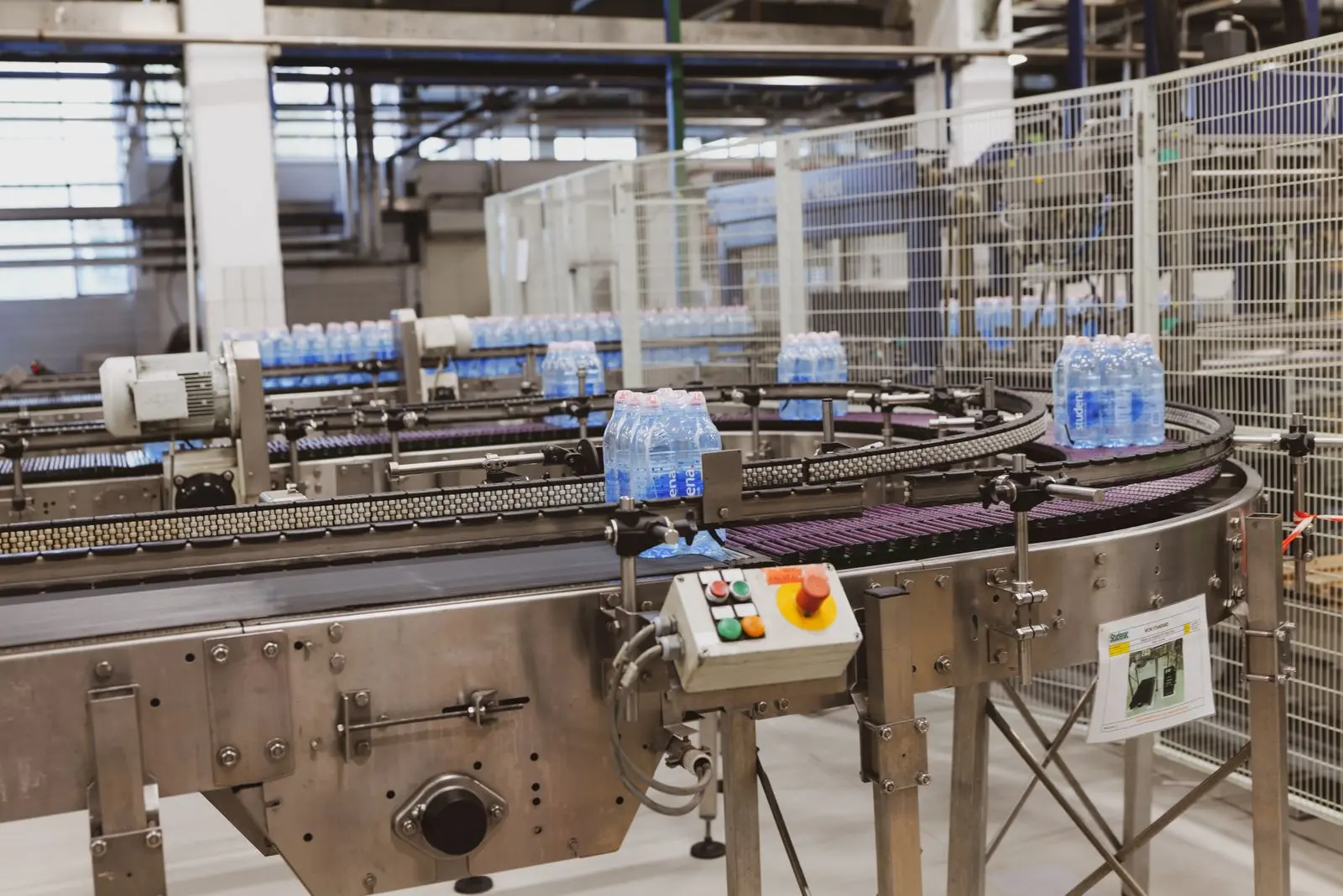
Case integrity
Corrugated grade, closure, compression strength, bulging and open flaps determine where the pack can be supported.

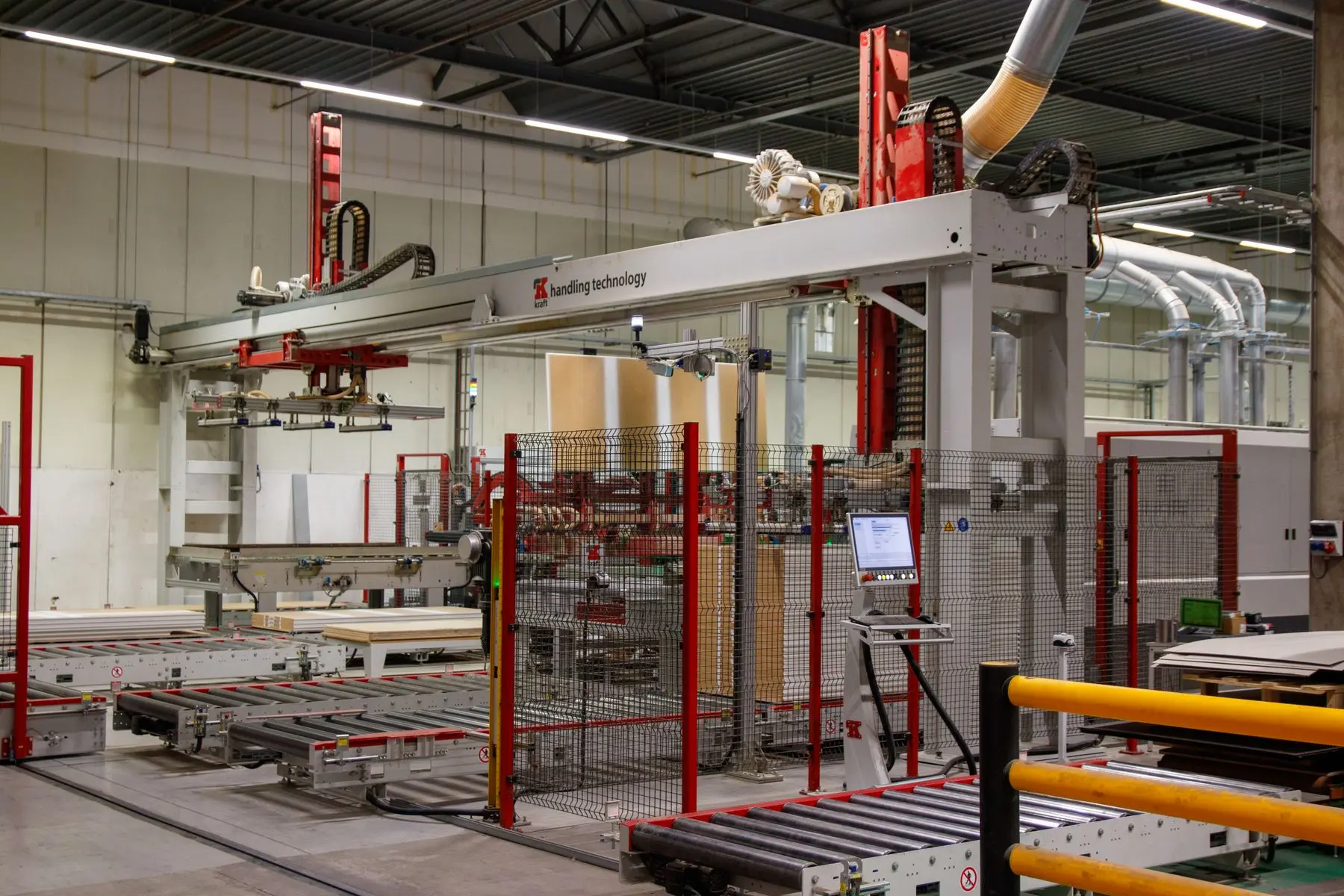
Robotic case and carton palletising
Reduce repetitive manual stacking and build consistent pallets with a complete cell designed around your case sizes, output, pallet patterns and changeovers.
Application engineering
Box palletising is not simply a robot moving a rectangular object. Case quality, centre of mass, conveyor gaps, label orientation and the way a pack arrives at the pick position all affect repeatability.
We review the complete end-of-line process so the cell can square, stop, detect and pick each case consistently before building the specified layer pattern.
Corrugated grade, closure, compression strength, bulging and open flaps determine where the pack can be supported.
Infeed direction, spacing, orientation and accumulation strategy establish a reliable robot pick condition.
Interlocked or column-stacked layers, overhang, gaps and label-facing rules are defined for the actual case sizes.
Cases per minute, SKU sequence, batch size and pallet exchange time are considered together—not in isolation.

Complete cell design
Vacuum tooling is often effective for sealed cases with a consistent, non-porous pick face. Fork, clamp or combined tooling may be more suitable where surfaces leak, packs distort or multiple cases need to be handled together.
The gripper is engineered with sensing and fault handling so a missed or unstable pick is detected before it compromises the stack.
What we need to know
A short product and line data set lets us assess likely architecture, payload, reach and peripheral equipment before detailed engineering.
| Design input | Why it matters | What to provide |
|---|---|---|
| Case range | Affects gripping area, change parts, robot path and pattern feasibility. | Minimum and maximum L × W × H, mass and photographs. |
| Pack construction | Porosity, tape seams, top load and bulging influence the gripping method. | Board grade if known, closure style and sample cases. |
| Production rate | Sets the available cycle time including robot travel and pallet exchange. | Cases/min by SKU, bursts, planned stops and shift pattern. |
| Pallet specification | Determines reach, stack height, clearances and outfeed handling. | Pallet L × W × H, maximum loaded height and load mass. |
| Pattern rules | Defines layer geometry, orientation, gaps and label-facing requirements. | Current pattern drawings or a representative finished pallet. |
Integrated around the robot
The surrounding equipment creates the repeatable pick, manages empty and full pallets and gives operators a controlled route for changeover and recovery.
Conveyors, stops, turners, squaring devices, accumulation and product detection configured around the upstream machine.
Empty-pallet presentation, pallet dispensers, centring, full-pallet outfeed and interfaces to forklifts or conveyors.
PLC and HMI control, recipe selection, guarded access, interlocks, emergency stops and defined recovery sequences.
Project route
A palletising project is only complete when the robot, product flow, pallet handling, control system and operator access work together. We keep the system boundary clear from the first layout.
See complete cell integrationProducts, rates, patterns, pallet formats, line interfaces and site constraints.
Robot, end effector, conveyors, safety architecture, controls and cell layout.
Programming, dry testing, product trials, recipe checks and agreed acceptance evidence.
Installation, commissioning, operator training and production handover.
Frequently asked questions
Often yes. The feasible range depends on case dimensions, mass, gripping surface, pattern and cycle time. A recipe-based cell can change robot paths and patterns, while the end effector may be fixed, adjustable or fitted with controlled zones.
Yes, where the infeed presentation and pattern allow it. Product turning, robot orientation and recipe rules can be designed to maintain a specified label-facing direction.
A robot can often build on two pallet positions or serve multiple infeed lanes, but reach, cycle time, guarding and pallet exchange must be checked on the proposed layout.
The cell can use product-present, position, vacuum and other sensors to stop or recover in a controlled way. The required detection and recovery strategy is agreed during engineering.
Yes. Empty-pallet dispensing, pallet centring, full-pallet conveyor outfeed and surrounding line interfaces can be included within the complete system scope.
Related systems
Open-top boxes need a grip and motion strategy that supports the pack without relying on an unsuitable open surface. Side clamps, forks or another proven tool may be considered with controlled acceleration, case presentation and layer design. Representative filled cases must be trialled.
Start with the application
Send the packaged-product dimensions and mass, current line rate, required pallet pattern, available space and a photo or video of the end of the line. We will identify the next technical step.
Planning a palletising project?
Send the product dimensions and weight, target output, pallet size and a photo or short video. We will review the application and identify the next technical step.