Mechanical frame
Stiffness, mass, reach offset and collision clearance coordinated with the robot and pallet envelope.

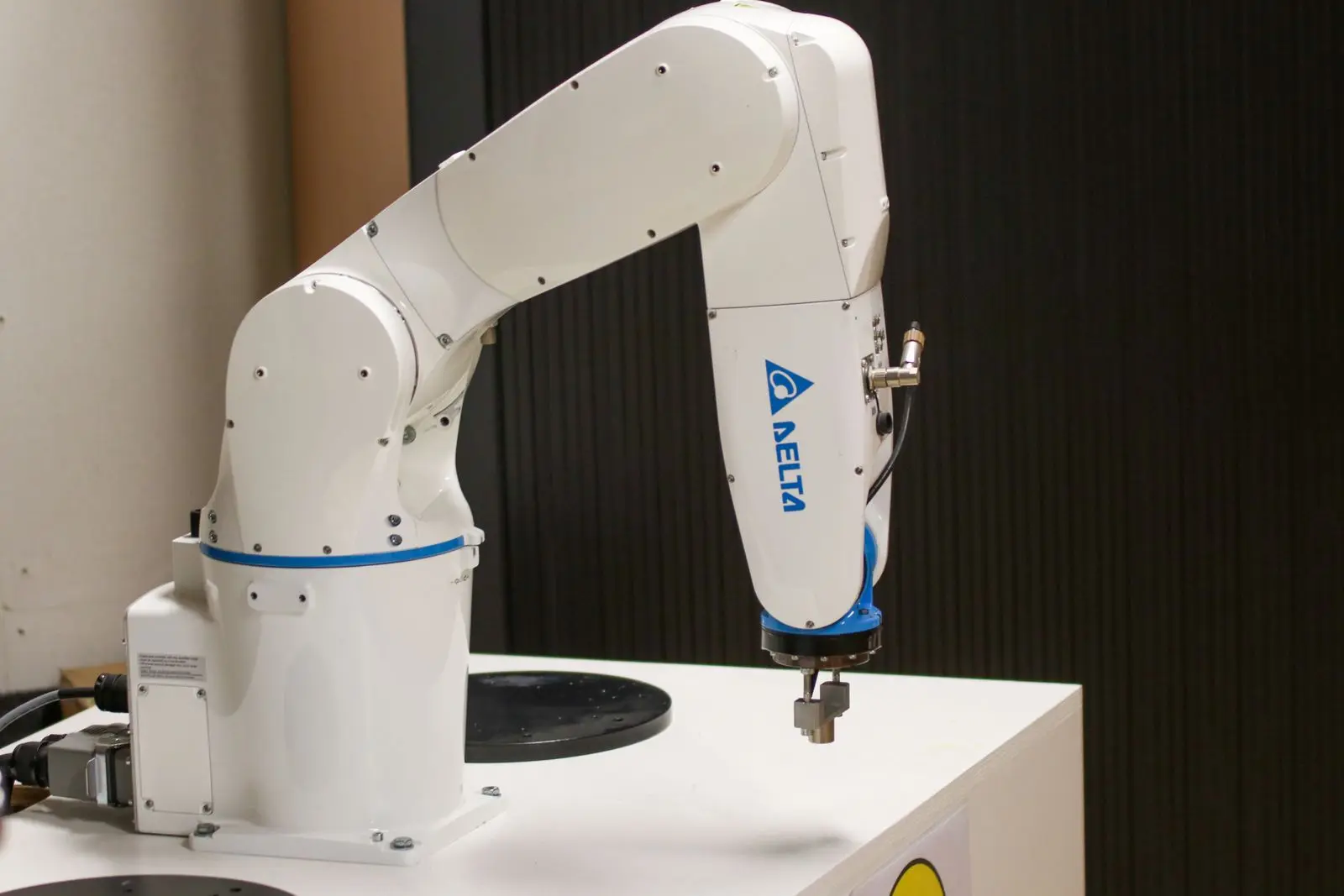
Robot end-of-arm tooling
Reliable robot palletising starts at the contact between tool and product. We assess pack surface, rigidity, porosity, centre of mass, pick quantity, release behaviour and failure detection before selecting vacuum, clamp, fork, support or hybrid tooling.
Quick answer
Selection depends on more than weight. A good end-of-arm tool accounts for porosity, deformation, acceleration, product variability, pallet access, multi-pick grouping, sensor confirmation, cleaning needs and the robot’s allowable payload and moments.
EOAT selection
| Tool type | Often considered for | Points to prove |
|---|---|---|
| Vacuum gripper | Sealed cartons, trays, sheets and some smooth or supported packs. | Surface porosity, leaks, cup coverage, vacuum reserve, release and energy supply. |
| Clamp gripper | Rigid cases, crates, bundles and products with usable side faces. | Grip force, crushing risk, dimension range, friction and clearance between loads. |
| Fork or under-support tool | Bags, trays, open cases or products that should be supported from below. | Infeed gaps, fork entry, withdrawal path, product sag and layer interference. |
| Bag gripper | Paper, woven or plastic sacks and flexible filled packs. | Fill distribution, seal position, puncture risk, dust, surface condition and shaping. |
| Row, layer or multi-pick tool | Higher-rate lines, bottles, collations and grouped products. | Group formation, combined payload, inertia, pallet access and failed-pick recovery. |
Product trials
Trials should represent the expected range of board grade, bag fill, moisture, label position, product temperature and manufacturing tolerance. The tool must also release cleanly at the highest and most obstructed pallet positions.
Complete tool design
Stiffness, mass, reach offset and collision clearance coordinated with the robot and pallet envelope.
Vacuum, air, valves, cable routing and energy management designed for repeated movement.
Product-present, vacuum, position and fault signals used to confirm each pick and place.
Automatic adjustment, recipes, change parts or tool changing selected for the SKU mix.
Related palletising guidance
See tooling, infeed and pallet patterns for cartons and cases.
Read this guidePlan sack conditioning, support and stable layer building.
Read this guidePrepare the product data needed for a useful technical review.
Read this guideFrequently asked questions
Vacuum often suits sealed cases with accessible faces, while clamp, fork or support tooling may suit porous, recycled, open or weak cartons. Product trials should confirm grip security and release across the full product range.
Bag tools may use forks, clamps, vacuum, support plates or hybrid methods. The choice depends on bag material, fill behaviour, seals, surface condition, product distribution and whether flattening or shaping is required before the pick.
Sometimes a common or adjustable tool can cover compatible products, but very different contact and support needs may require controlled change parts or automatic tool changing. Complexity should be balanced against rate and changeover frequency.
Payload includes the product or multi-pick group, complete end effector, brackets, valves, sensors, hoses, cables and any retained layer sheet. Load offset, wrist moments and inertia also matter.
Depending on the tool, confirmation can use vacuum switches, pressure monitoring, jaw or fork position, product sensors, load feedback and place confirmation. Recovery behaviour is defined in the PLC and HMI sequence.
Start with the application
Send the packaged-product dimensions and mass, current line rate, required pallet pattern, available space and a photo or video of the end of the line. We will identify the next technical step.
Planning a palletising project?
Send the product dimensions and weight, target output, pallet size and a photo or short video. We will review the application and identify the next technical step.