Cases, cartons and trays
Vacuum, clamp or support tooling selected around board strength, openings, labels and retail-ready surfaces.
Explore box palletising
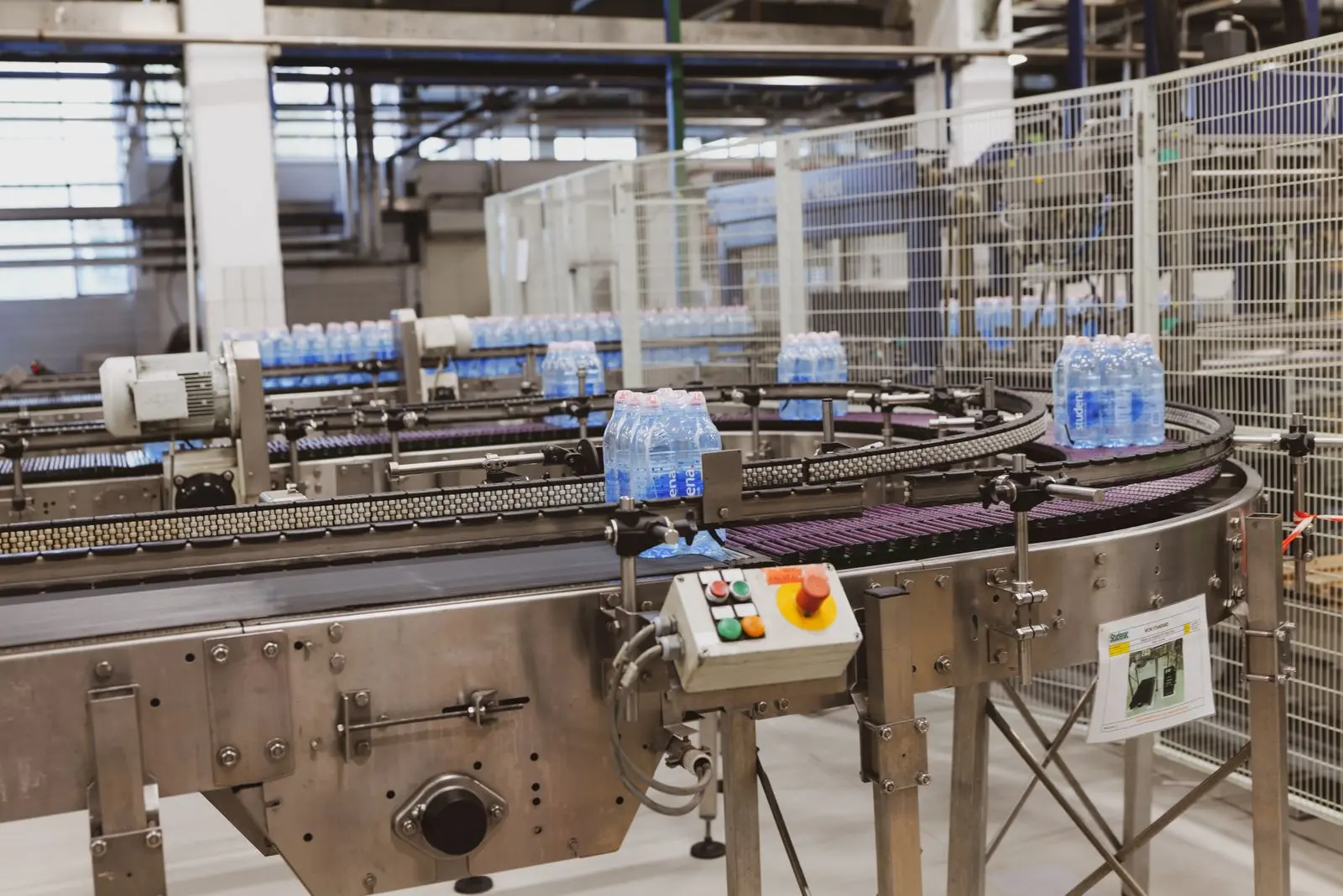
Food and drink end-of-line automation
Automate palletising for cases, trays, sacks, bottles, cans, jars and shrink-wrapped collations with a cell designed around the actual product matrix, environment, cleaning method and upstream packaging line.
Quick answer
Start with every case, tray, sack, bottle or collation to be handled; the required rate by format; pallet and layer-sheet rules; cleaning regime; production zone; and interfaces to packers, labellers, checkweighers, wrappers or warehouse conveyors.
Pack formats
Vacuum, clamp or support tooling selected around board strength, openings, labels and retail-ready surfaces.
Explore box palletisingIndividual, row, tray or layer handling coordinated with collation stability and pallet pattern.
Explore bottle palletisingBag conditioning, shaping, support and interlocking patterns for stable finished loads.
Explore bag palletisingHygiene and environment
“Food grade” is not a complete specification. Equipment choices depend on whether the cell is outside the exposed-product area or within a controlled zone, plus temperature, condensation, dust, cleaning chemicals, hose-down practice and material restrictions.
Production integration
Recipe, line source, barcode or upstream signals identify the correct handling and pallet destination.
Interfaces can include product detection, checkweighing, label status and rejected-pack routing.
Layer sheets, top frames, stretch wrapping and pallet labelling coordinated in the full line scope.
Access-controlled HMI selection reduces manual setup and records the active production format.
Related palletising guidance
Frequently asked questions
Typical packaged products include sealed cases, trays, cartons, sacks, bottles, cans, jars and shrink-wrapped collations. The product, primary packaging and pallet stability must be assessed together.
Potentially, but robot, tooling, conveyors, materials, electrical equipment and cleaning access must match the specified temperature, hygiene zone and washdown or cleaning regime. The environmental requirement should be defined at the start.
Often yes. Recipe control can coordinate guides, pick quantity, tool settings and pallet pattern for compatible formats. Product trials establish the practical range and whether change parts or additional tooling are required.
Yes. The palletising cell can exchange signals and data with upstream packaging machinery and downstream checkweighing, print-and-apply labelling, stretch wrapping, conveying or warehouse handling where these interfaces are included in scope.
Tool contact, gripping force, support, acceleration and release are assessed on representative products. Trials should include weaker board, shrink wrap, labels and the most damage-sensitive approved pack.
Start with the application
Send the packaged-product dimensions and mass, current line rate, required pallet pattern, available space and a photo or video of the end of the line. We will identify the next technical step.
Planning a palletising project?
Send the product dimensions and weight, target output, pallet size and a photo or short video. We will review the application and identify the next technical step.