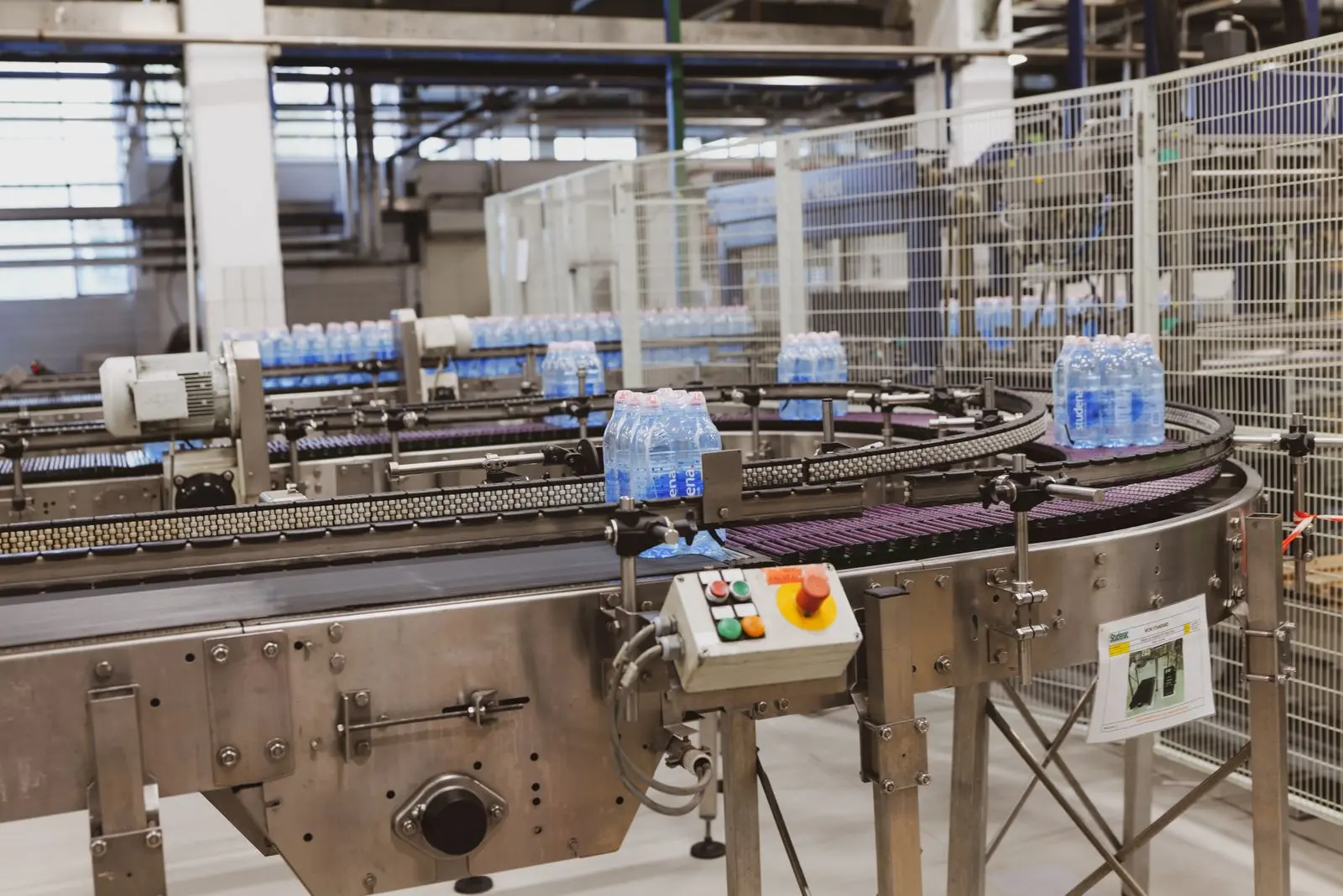
Filled geometry
The actual footprint, thickness, centre of mass and degree of product movement define support and placement needs.

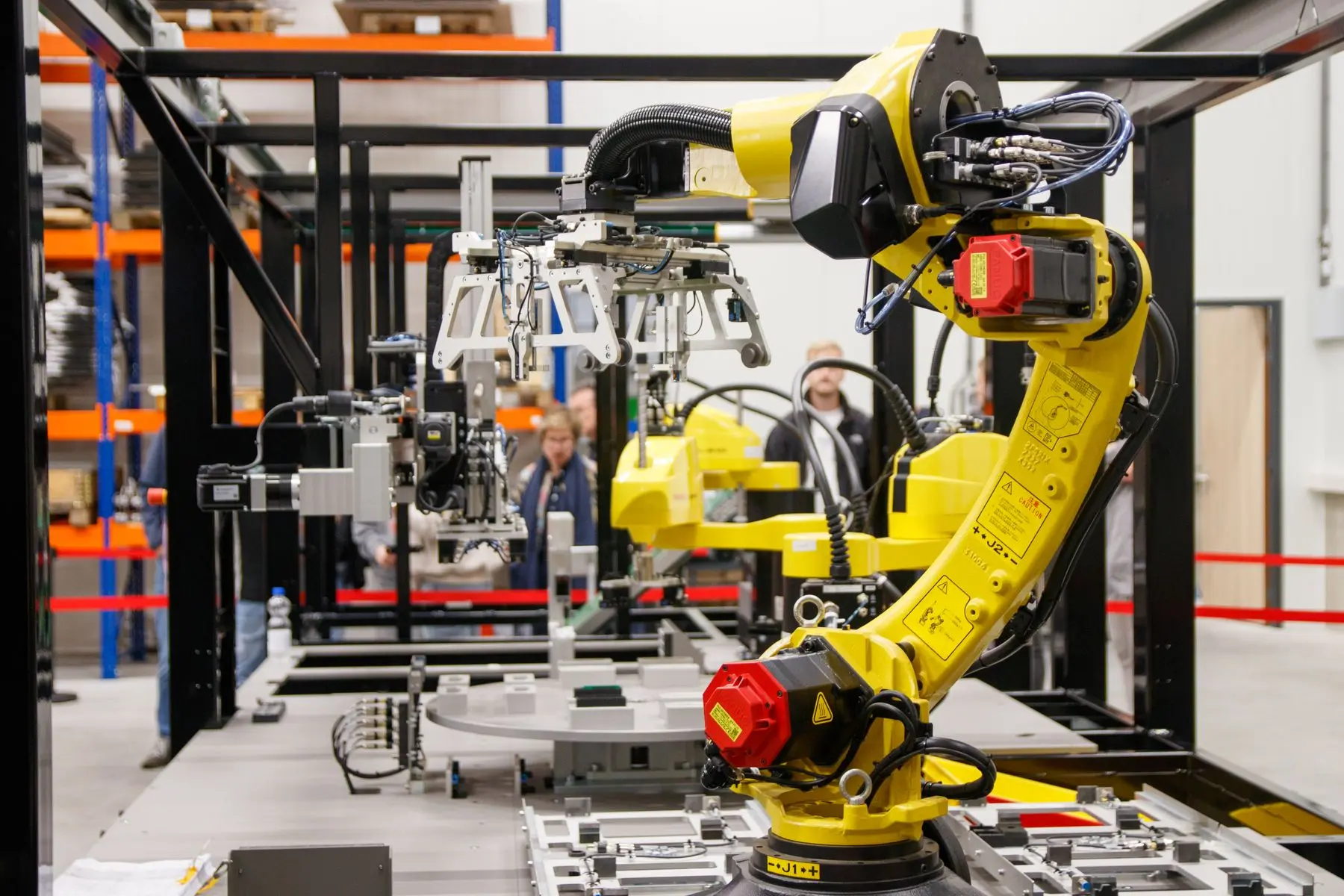
Robotic sack and bag palletising
Create stable, repeatable pallet loads by controlling how each filled bag is settled, presented, gripped and placed—without relying on repetitive manual lifting.
Application engineering
Flexible packs change shape between filling, conveying and palletising. The same nominal bag can arrive with a different footprint if the contents settle unevenly, air remains trapped or the seal area folds.
A reliable cell therefore begins with bag conditioning and consistent presentation. The robot and gripper are then selected against the real filled pack, not an empty-bag drawing.
The actual footprint, thickness, centre of mass and degree of product movement define support and placement needs.
Paper, woven polymer and smooth film behave differently under vacuum, clamping, acceleration and layer-to-layer contact.
Flattening, settling, de-aeration and controlled conveying help create a repeatable pick shape and stable layers.
Interlock, overlap, orientation, slip sheets and permitted compression are considered for handling and transport.

Complete cell design
Fork-style or under-support tooling can reduce dependence on the top surface. Clamp, vacuum or hybrid tooling may suit other bags, depending on porosity, seal strength, product movement and the acceptable contact area.
We include the gripper and its services in payload calculations, then model the robot path to control acceleration and bag deformation.
What we need to know
For early assessment, provide representative filled bags or clear video as well as the drawing. Filled behaviour is central to gripper and pattern design.
| Design input | Why it matters | What to provide |
|---|---|---|
| Filled bag | Product movement and trapped air change the pick shape and centre of mass. | Filled L × W × H, weight range, photos and samples where possible. |
| Material and closure | Porosity, seams, valves and heat seals limit safe contact and vacuum performance. | Bag construction, seal location and any no-contact areas. |
| Upstream process | Filling and conveying affect orientation, temperature and how well the contents settle. | Filler discharge height, conveyor details and a process video. |
| Required output | Cycle time must include conditioning, pick, travel, placement and pallet exchange. | Bags/min, batch profile, shifts and upstream surge behaviour. |
| Finished load | Transport, wrapping and storage rules shape the pattern and layer interfaces. | Pallet size, stack height, pattern and downstream stretch wrapping. |
Integrated around the robot
A stable bag palletiser uses controlled product flow and a gripper designed around the filled pack, supported by a pattern that accounts for settling over time.
Settling, flattening, orientation and metered release can be integrated between the bagging machine and robot pick point.
Fork, clamp, vacuum or hybrid tooling assessed against the filled bag, seal areas, required rate and complete moving payload.
Pallet presentation, slip sheets, full-pallet outfeed and stretch-wrapper interfaces can form part of one coordinated cell.
Project route
A palletising project is only complete when the robot, product flow, pallet handling, control system and operator access work together. We keep the system boundary clear from the first layout.
See complete cell integrationProducts, rates, patterns, pallet formats, line interfaces and site constraints.
Robot, end effector, conveyors, safety architecture, controls and cell layout.
Programming, dry testing, product trials, recipe checks and agreed acceptance evidence.
Installation, commissioning, operator training and production handover.
Frequently asked questions
Both can be suitable, but the tooling and motion profile may differ. Paper porosity, film stretch, surface friction, seals and product movement must be assessed using representative filled bags.
Many applications benefit from controlled settling or flattening because it makes the pick geometry and finished layers more consistent. The required conditioning depends on the fill material and bag construction.
Yes. Interlocked patterns, alternating orientations and controlled overlap can be programmed where the bag shape and stability support them.
We calculate the complete moving payload: filled bag or bags, end effector, brackets, valves, hoses and any additional tooling. Reach, inertia and duty are checked as well as headline payload.
Yes. Full-pallet conveyor outfeed and an interface to downstream wrapping can be included, subject to the agreed system boundary and site layout.
Related systems
Start with the application
Send the packaged-product dimensions and mass, current line rate, required pallet pattern, available space and a photo or video of the end of the line. We will identify the next technical step.
Planning a palletising project?
Send the product dimensions and weight, target output, pallet size and a photo or short video. We will review the application and identify the next technical step.